

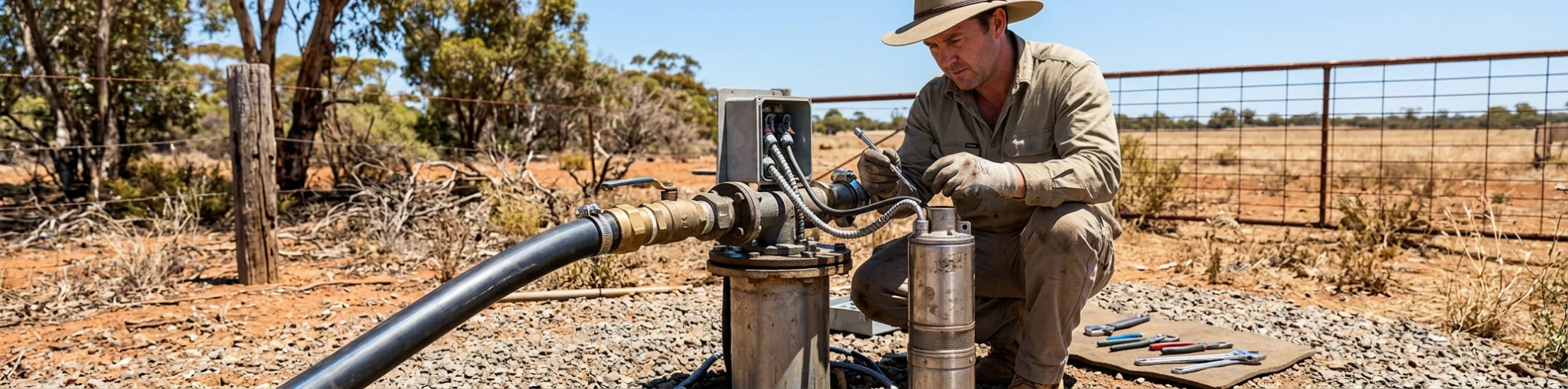
A bore pump can be doing its work out of sight for long periods, which makes maintenance easy to postpone and hard to schedule well. A sudden change in irrigation coverage, pressure or water appearance can then leave a property owner deciding whether the issue is routine wear, a bore condition, a control event or something else in the system.
That is why a useful bore pump maintenance schedule is not a generic calendar. It is a plan for noticing meaningful change, comparing it with a known starting point, and involving the right qualified people when the evidence calls for it. The interval and scope of servicing depend on the pump, bore, water, controls, operating pattern and the installed manufacturer instructions.
For submersible equipment, the pump itself is not readily visible during normal operation. A general submersible pump symptom checklist can help you recognise irregular flow, reduced output, overheating, unusual noise and visible silt or sand as signals worth recording. It should not be used to diagnose a cause or set a universal service interval.
This guide sets out a condition-based approach for Perth and WA properties. It separates safe operating observations from work that needs qualified pump, electrical or bore personnel, so the next decision is based on records rather than assumptions.
A Schedule Should Follow Site Evidence, Not a Generic Date
Calendar reminders can help make sure a system is not forgotten, but a date alone does not reveal what the equipment has experienced. Service timing can be affected by the pumping environment, wetted materials, water chemistry, solids, pump velocity, operating hours, starts and stops, control behaviour and the manufacturer’s requirements. A bore that has seen a changing water condition or unusual operating demand may need attention sooner than another system of the same age.
Treat the schedule as four connected layers:
- routine observations that can be made safely from the operating side of the system;
- recorded trend reviews at comparable operating conditions;
- trigger-based investigation when performance or condition changes; and
- qualified servicing and retrieval work defined by the installed equipment and site evidence.
This approach is especially useful for properties where irrigation demand changes across the year. A pressure change during a high-demand period may reflect a valve, leak or nozzle condition rather than a pump fault. Equally, a change that persists after the irrigation system is checked should not be dismissed as seasonal use.
Start With the Commissioning Baseline
The first maintenance record is the most valuable one because it gives later observations something real to compare with. If commissioning information exists, retain it with the bore documentation. It may include flow, pressure, drawdown and power observations made when the system was commissioned. Those are not universal performance targets. They are site-specific reference points for the installed arrangement at that time.
Build a single system file that brings together:
- installation and commissioning records;
- pump and motor identification, manufacturer instructions and component age;
- bore log, where available, and any measured static or pumping water levels and recovery information;
- comparable flow, pressure, current and power readings;
- run hours, starts, trips and alarms where the controls make them available;
- water appearance, water-quality results and evidence of sand, silt, scaling or corrosion;
- previous service reports, repairs and replaced components; and
- irrigation layout information, including leaks, valve positions, nozzle condition and seasonal demand changes.
Keep the separate records separate in your thinking. A pumping water level and bore recovery describe source behaviour. Total dynamic head describes the hydraulic demand imposed by the pipework and discharge system. A pump curve is used to assess the pump at a duty point. Motor cooling and water chemistry are their own checks. None of these can be assumed from a pressure gauge reading or from the total depth of the bore.
Make Safe Routine Observations During Normal Use
Owners and operators are often the first to notice a change. The useful task is observation, not intervention. During normal operation, note whether coverage, flow or pressure appears stable for the expected irrigation zone or water use. Watch for persistent wet areas, broken nozzles, leaking pipework, changed valve positions or a demand pattern that has changed since the last comparison.
Also note what the water looks like at the usual observation point. Visible sand or silt, a changed appearance, or a new deposit can be relevant evidence, but it does not establish where the issue started. It may be connected to bore condition, particle entry, hydraulic wear or another part of the water path. Preserving the observation, with the date and operating condition, is more useful than naming the fault early.
Listen for a new or persistent sound only from a safe location. Record when it occurs, whether it is tied to a particular zone or control state, and whether it is accompanied by lower pressure or changing flow. Do not open an electrical panel, alter protection settings, lift equipment or attempt electrical work as part of routine checking. Follow the installed manufacturer instructions and site safety controls for any work beyond normal external observation.
For broader planning context, preventative and predictive maintenance is best understood as using planned checks and condition information together. It is not a reason to treat every observed change as a pump failure.
Let Changes Trigger Diagnosis, Not Guesswork
An earlier inspection is justified when a change is sustained, repeats under comparable conditions, or occurs alongside another change in the record. Useful triggers include reduced or irregular output, pressure that no longer behaves as expected, a changing current or power trend, repeated trips, unusual noise, new visible sand or silt, or measured changes in water level where those readings are available.
The next question is not “what part has failed?” It is “what changed, where was it measured, and what other evidence agrees with it?” A drop in irrigation performance might involve a pump, the bore, rising main, control settings, a restriction, a leak, a valve or the irrigation distribution system. A control trip may be a protection response, an electrical issue or a condition that needs further investigation. One symptom rarely establishes a single cause.
If a protection device records low-flow or dry-run-related events, retain the event history and the operating conditions around it. The low-flow bore-pump protection information is a useful reader pathway for understanding protection functions. Protection is not a substitute for well testing, water-level measurement, equipment inspection or competent servicing. A pump operating above sustainable bore yield is not made suitable by a control alone.
The broader APT Water information pathway can help readers place those event records within the full bore-pump system. The evidence still needs to be checked against the installed equipment, bore information and current manufacturer documentation.
At this point, prepare a short event note: the date and time, the affected zone or use, what changed, relevant alarm or trip information, recent irrigation or plumbing changes, and any readings taken at the same location as the baseline. That record helps prevent a service visit beginning with an untestable description such as “the bore pump seems weak”.
Keep the Causes in Their Own Lanes
Good maintenance decisions become clearer when the system is divided into components and checks. A qualified investigation may consider several of the following at once, but the evidence should not be blended into one assumed diagnosis.
Pump and motor. The assessment may need to consider the pump’s hydraulic condition, motor operation, current or power trend, manufacturer guidance and cooling requirements. These are not confirmed by one noise observation or a single flow reading.
Bore and groundwater source. Bore yield, pumping water level, recovery, construction and water condition can affect what the source can sustain. A lower flow demand does not prove that a pump is unsuitable, and a target flow does not prove sustainable yield.
Rising main and pipework. Leaks, restrictions, damaged pipework and changing valve positions can alter hydraulic behaviour. They need to be distinguished from pump wear before equipment is retrieved or replaced.
Controls and electrical protection. Alarms, trips, starts and control states may provide useful history. Any adjustment or diagnosis inside electrical equipment belongs with appropriately qualified personnel and the site’s procedures.
Irrigation distribution. Nozzles, filters, valves, zone configuration and seasonal demand can change the water the system is asked to deliver. A distribution issue can look like a bore-pump issue from a distance.
Set Qualified Checks Around the Installed System
Qualified servicing is not a fixed annual ritual for every WA bore. It should be planned from the installed manufacturer requirements, component age, duty history, environment and the trend record. The scope may include electrical safety controls, insulation or motor checks where appropriate, control history, measured performance under a defined condition, water-quality evidence, pipework condition and retrieval inspection where the evidence warrants it.
Retrieval is a significant decision because the pump is below ground and may involve lifting equipment, electrical isolation and bore access. It should follow a documented reason and appropriate site controls, not an owner’s response to one imperfect observation. Where a pump is inspected or removed, record the findings before parts are cleaned, repaired or replaced. The condition of the pump, cable, rising main and related components can inform the next maintenance decision, but it does not automatically explain the underlying bore or water condition.
For properties using a contractor or a specialist, give them the manufacturer instructions, original baseline, service history and the evidence from the current event. That makes bore pump servicing WA more focused: the purpose is to establish the condition of this system, rather than apply a generic checklist to an unknown installation.
Turn Every Service Event Into a Better Record
The final step in a maintenance cycle is to update the baseline rather than simply close the job. Add the service date, reason for the work, observations, readings, test conditions, actions taken and any manufacturer or contractor recommendations. If a new reference condition is established, label it clearly and explain why it replaced the earlier one.
Compare future readings only when the operating conditions are similar. A flow reading at a different irrigation demand, water level or valve position cannot be treated as a like-for-like decline. Water analysis also needs context, because a result may guide materials and maintenance decisions without making any one material universally suitable.
If the record suggests a developing trend, keep collecting evidence rather than repeatedly changing settings. This improves the chance that the next qualified review can separate source behaviour, pump condition, pipework losses, controls and irrigation demand. It also makes a condition-based bore pump maintenance schedule easier to manage across changing seasons in Perth and regional WA.
Bring the Right Evidence to the Next Review
The most useful maintenance schedule is a living record: establish the commissioning baseline, make safe observations, investigate sustained changes, and set qualified checks around manufacturer and site evidence. It avoids both extremes of ignoring a change and treating every symptom as a pump failure.
When you need assistance with bore pump servicing WA, prepare the baseline readings, alarm and trip history, bore or water-level information, water-quality or sand evidence, irrigation changes, manufacturer instructions and previous service reports. You can contact APT Water with that record to begin a more informed discussion, without assuming that the information alone confirms a final diagnosis or selection.
Frequently Asked Questions
How Often Should a Bore Pump Be Serviced?
Follow the installed manufacturer and site requirements, using operating and condition evidence to determine timing. There is no universal monthly, quarterly or annual interval that suits every bore, water condition, pump and control arrangement.
What Changes Justify an Earlier Inspection?
Investigate sustained changes in flow, pressure, current, trips, noise, water level or visible sand and silt evidence. Record the operating conditions and check related pipework, controls and irrigation factors before assuming a single cause.